

The Rise of Soulbound Tokens: Blockchain’s Next Leap Toward Digital Identity
Published on: 27 November 2025
The most disruptive thing blockchain will do is not just create new money or NFT art collections. Its deepest impact will be on identity.
In 2025, a quiet shift is happening: Soulbound Tokens (SBTs) are moving from concept to production. These non-transferable tokens are designed to represent who you are – your credentials, reputation, memberships, and history – directly on-chain.
What Are Soulbound Tokens?
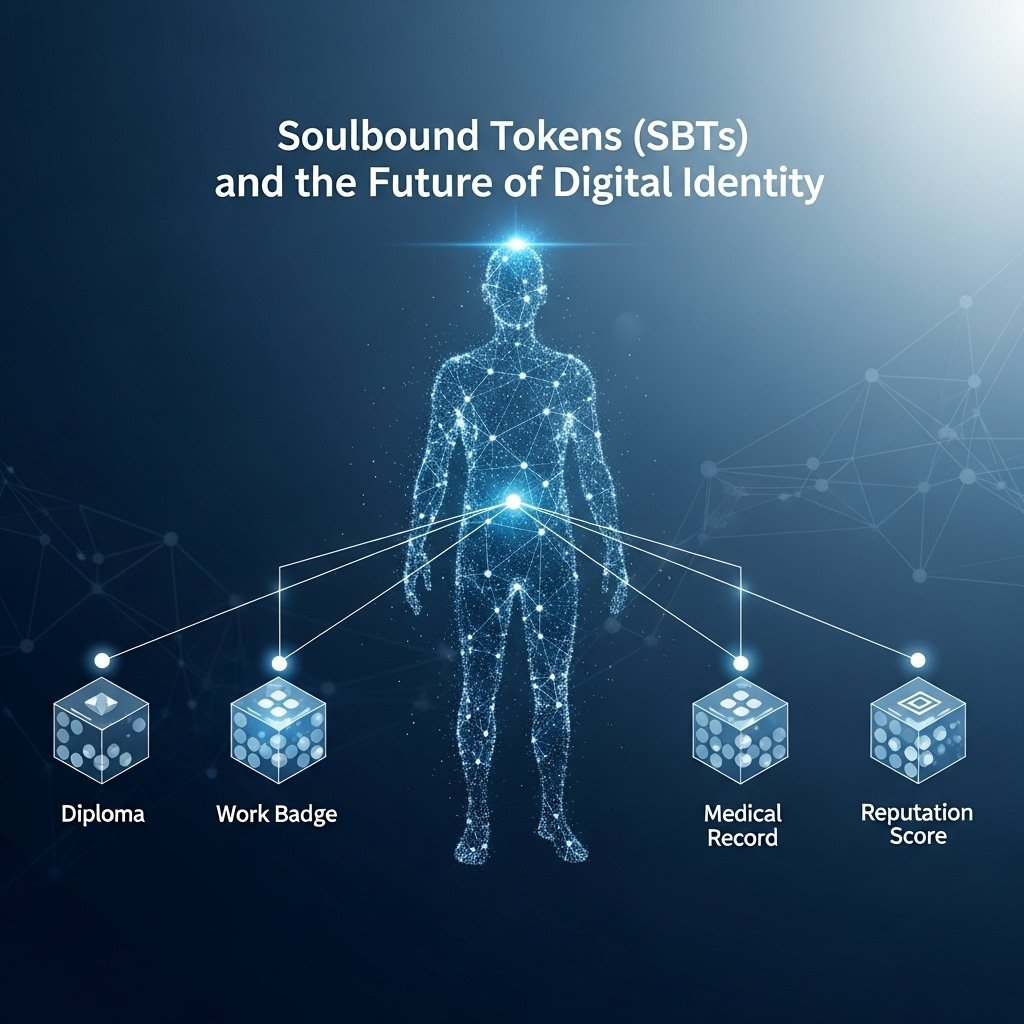
Soulbound Tokens are a special type of token that cannot be sold or transferred. Once issued to your wallet, they stay “bound” to it. Think of them as verified badges of identity and reputation in Web3.
They can represent:
- University degrees and academic records
- Professional certifications and training badges
- Membership in organizations, DAOs, or communities
- On-chain reputation: past contributions, votes, and verified activity
- Loyalty tiers for brands, products, and services
Instead of a PDF résumé or a LinkedIn profile that anyone can fake, SBTs offer cryptographically verifiable identity signals on a public ledger.
Why Soulbound Tokens Matter
SBTs sit at the intersection of identity, trust, and coordination. If they scale, they could change how we hire, lend, reward, and govern.
1. Ending Résumé and Credential Fraud
Employers and institutions can verify degrees, certifications, and work history directly on-chain. No more manual email checks or fake certificates in slides and CVs.
2. Smarter Hiring and Talent Matching
A wallet containing SBTs from universities, bootcamps, hackathons, and companies becomes a machine-readable professional identity. AI systems can match opportunities to people using rich, verified on-chain credentials instead of self-declared claims.
3. Loyalty and Membership 2.0
Instead of scattered loyalty cards and hidden points, brands can issue SBTs as permanent membership and loyalty markers. Your wallet can show your long-term relationship with a brand, airline, gym, or platform – unlocking better personalization and rewards.
4. Stronger Governance for DAOs and Protocols
Today, governance is often just “token voting” where whales dominate. With SBTs, DAOs can factor in reputation and contribution history, not just wallet balance. Builders, contributors, and long-term participants can get higher influence than short-term speculators.
5. Foundation for Decentralized Credit
In DeFi, lenders rarely know who they are lending to. SBTs can anchor a decentralized credit profile – combining on-chain repayment history with other verified credentials – making undercollateralized lending more realistic.
Who Is Experimenting With SBTs?
The idea of Soulbound Tokens was popularized by Vitalik Buterin and collaborators in their paper on “Decentralized Society (DeSoc).” Since then, multiple ecosystems have explored SBT-like identity tokens:
- Universities testing blockchain diplomas and certificates
- Crypto exchanges issuing Web3 identity credentials and KYC attestations
- DAOs and communities issuing non-transferable badges to core contributors
- Web3 social and identity protocols building wallet-based reputation layers
Governments and regulators are watching closely. Over time, we are likely to see digital licenses, permits, and IDs built using similar primitives, even if they aren’t called “Soulbound Tokens” publicly.
Risks and Open Questions
SBTs also raise serious questions. A permanent on-chain identity trail can be powerful, but also dangerous if used for surveillance, discrimination, or social control.
- Privacy: How much of your identity should live on a public chain?
- Recovery: What happens if you lose access to your wallet?
- Reputation lock-in: Can people escape old mistakes, or will they be permanently visible on-chain?
- Regulation: How will data protection laws respond to immutable identity tokens?
Any serious SBT ecosystem will need privacy layers, recovery mechanisms, and governance built from day one.
What Impact Could SBTs Have on the Blockchain Ecosystem?
If SBTs succeed, they could shift blockchain’s center of gravity from speculation to utility and coordination.
- For individuals: A portable, verified digital identity that travels with you across platforms, borders, and jobs.
- For businesses: New ways to build and reward long-term relationships, not just transactions.
- For DeFi: More nuanced risk assessment and credit models based on reputation, not only collateral.
- For governance: Communities that recognize contribution and expertise, not just capital.
The result: a more trusted, composable, and human-centric Web3.
Call to Action: Where Do You Fit In?
The shift from “crypto as currency” to “crypto as identity and reputation” is already underway. The question is not whether Soulbound Tokens will matter – it’s how you will engage with them.
If you are a developer: explore integrating SBTs for sign-in, credentials, and access control in your dApps or platforms.
If you are a business or brand: think beyond loyalty points and discount codes. Design membership and status that can be recognized across ecosystems using non-transferable tokens.
If you are an educator or institution: pilot blockchain-based certificates and explore how verified credentials can support your learners globally.
If you are an investor or policymaker: track projects building identity, reputation, and compliance layers instead of only trading-focused tokens.
The future of decentralized identity is being written now. Whether you build, regulate, invest, or simply use these systems, this is the moment to pay attention.
Key Takeaway
Soulbound Tokens push blockchain beyond speculation into the realm of who we are, what we’ve done, and how we’re trusted online. If blockchains were phase one of programmable money, SBTs may be a core building block of programmable identity.
The wallets of the future won’t just hold your assets. They’ll hold your story.